In your own perimeter
Brayns runs on your own infrastructure, inside your perimeter. No prompt, no case, and no decision is sent to an outside service to be processed.
The most capable model for compliance decisions. It thinks the problem through and gives you an answer it can defend. General models guess. Brayns knows.
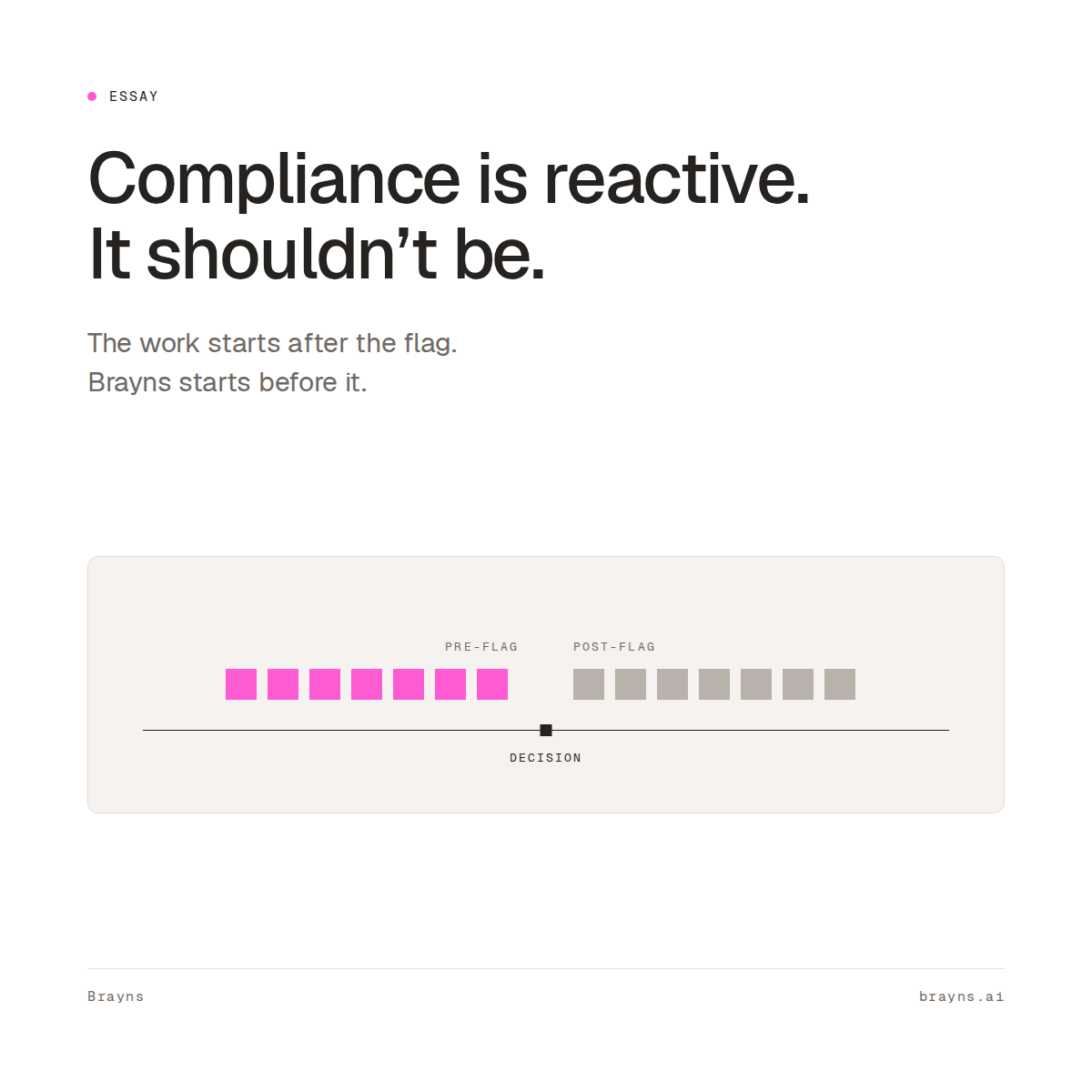
The same intelligence that writes emails and summarises the news, now trusted with decisions a regulator will judge you on. It sounds right and is confidently wrong, which in compliance is the worst way to fail.
Brayns is built the other way around.
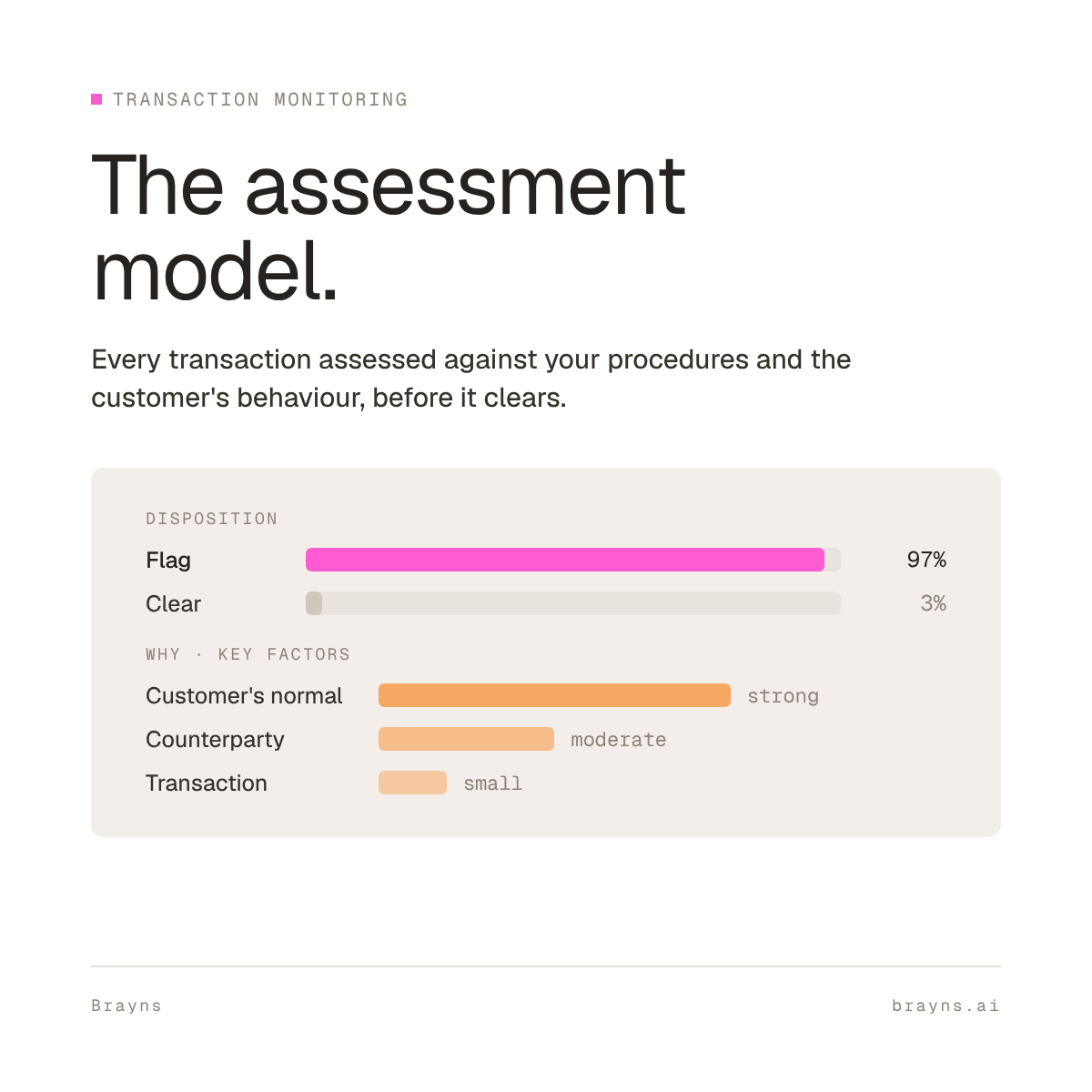
The judgement is in the model, not layered on around it. It reasons in the domain instead of guessing at it, and it knows the edge of what it knows. Asked something it cannot ground, it stops and says so, rather than filling the gap with something that sounds right.
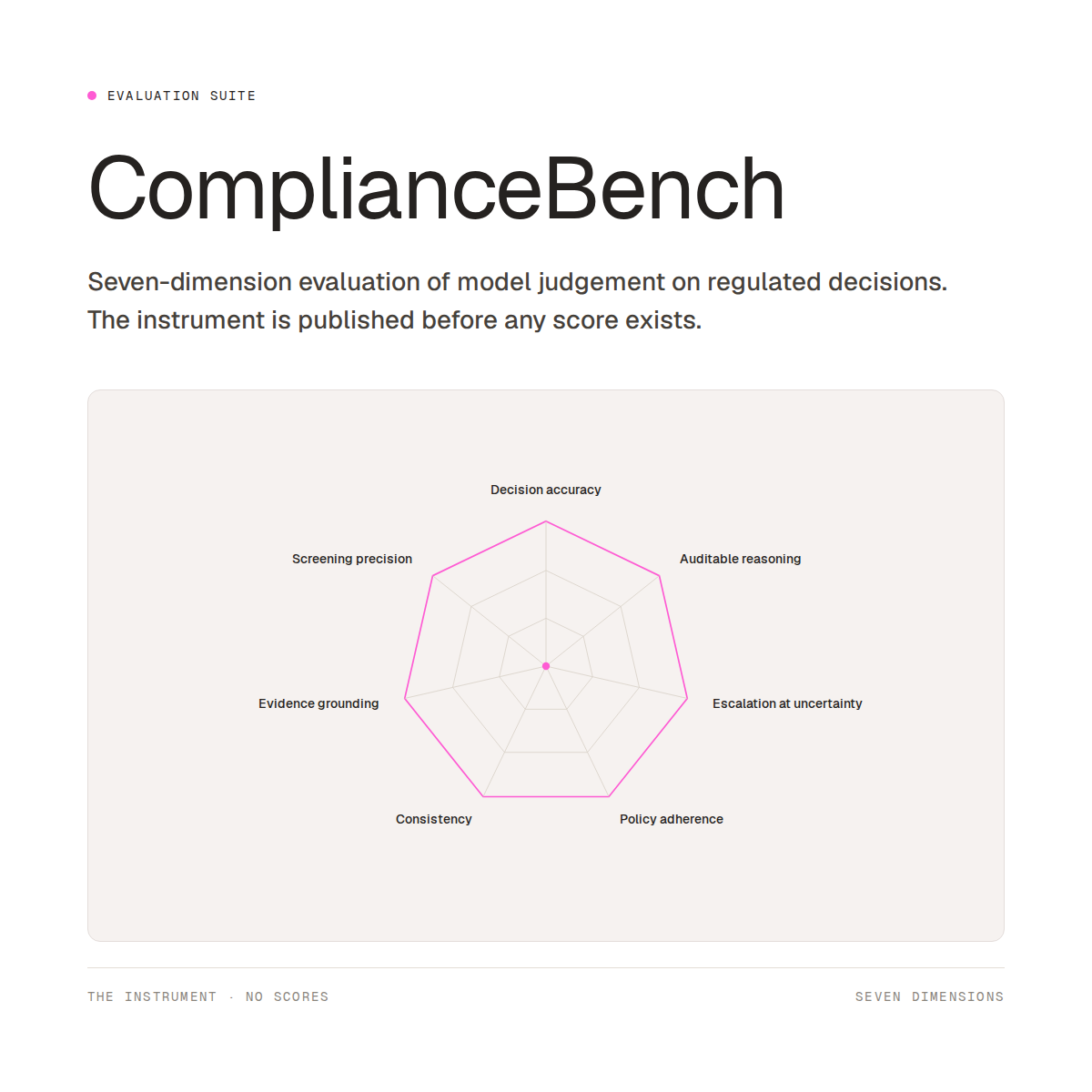
A general model is ranked on trivia and puzzles. None of that says whether it can be trusted with a compliance decision. Brayns is measured on the things that matter, on real compliance work, not a demo.
General models jump to an answer and reason backwards to justify it.
General models fall back on what they half-remember from training.
General models fill gaps with something that sounds right.
General models are built to be helpful, so they comply.
General models read it like any other text, and miss what binds.
General models were never built for the depth in the first place.
The model is a foundation, and a foundation gets better the more you build on it. Every way Brayns is used feeds more of how you work into it: analysts questioning it, agents running the work, your own policies and case history read in. Each one makes the ground it reasons over richer, and more specifically yours.
A general-purpose model is the same on your first day as on your thousandth. It never gets sharper at your compliance, because none of your policies or cases live inside it. In Brayns, they do. Every case it handles and every policy it reads leaves it more grounded in the way your firm works, and further ahead of a model that starts from nothing each time. The distance between them is not a fixed number. It grows the more you use Brayns.
Sending your compliance data to a model in someone else's cloud is not an option for a regulated firm. Brayns runs inside your own environment instead, on your infrastructure, where your data already is.
Brayns runs on your own infrastructure, inside your perimeter. No prompt, no case, and no decision is sent to an outside service to be processed.
Your policies and cases are never used to train the underlying model, and never pooled with another customer's. What is yours stays yours.
Query it from a chat, build on it through the API, or run agents on it that carry out the work. One model, and every use runs in the same place, inside your environment.
Because the model runs where you put it, your data stays in the region and under the controls your regulator expects. Residency is a deployment choice, not a promise.
On top of it sits the agentic platform that runs your compliance operation. It holds because the foundation does.